


Replacing windows in Chesterfield’s conservation areas needs a deep understanding. We help homeowners through these rules. This way, we keep the area’s history safe.
Renovating windows in these areas is very important. We must follow rules about materials and designs. Timberlook’s conservation windows are made to fit these rules. They look good and are allowed.
Key Takeaways
- Understand the regulations governing window replacement in Chesterfield’s conservation areas.
- Choose materials and designs that comply with conservation guidelines.
- Consider using conservation-specific window solutions like Timberlook’s conservation windows.
- Work with local authorities to ensure compliance with conservation regulations.
- Maintain the historical integrity of the conservation area through sensitive window renovation.
Understanding Conservation Areas in Chesterfield
Chesterfield’s conservation areas are full of history and beautiful buildings. It’s important to know the rules for changing windows here. These areas protect their history and look, so any changes must follow strict rules.
What Defines a Conservation Area?
A conservation area in Chesterfield is special because of its history and buildings. It has buildings and features that are worth keeping. Local rules help keep these areas looking as they should, including windows in listed buildings Chesterfield windows.
Some key features that define a conservation area include:
- Historic buildings and their architectural details
- Traditional materials and construction methods
- The overall aesthetic and character of the area
Importance of Conservation Status
The conservation status of an area is very important. It makes sure changes, like new windows, are done right. For heritage conservation windows Chesterfield, this means following strict rules to keep buildings looking original.
Some of the reasons why conservation status is important include:
- Preserving the historical integrity of the area
- Maintaining the aesthetic appeal of the conservation area
- Supporting the local identity and cultural heritage
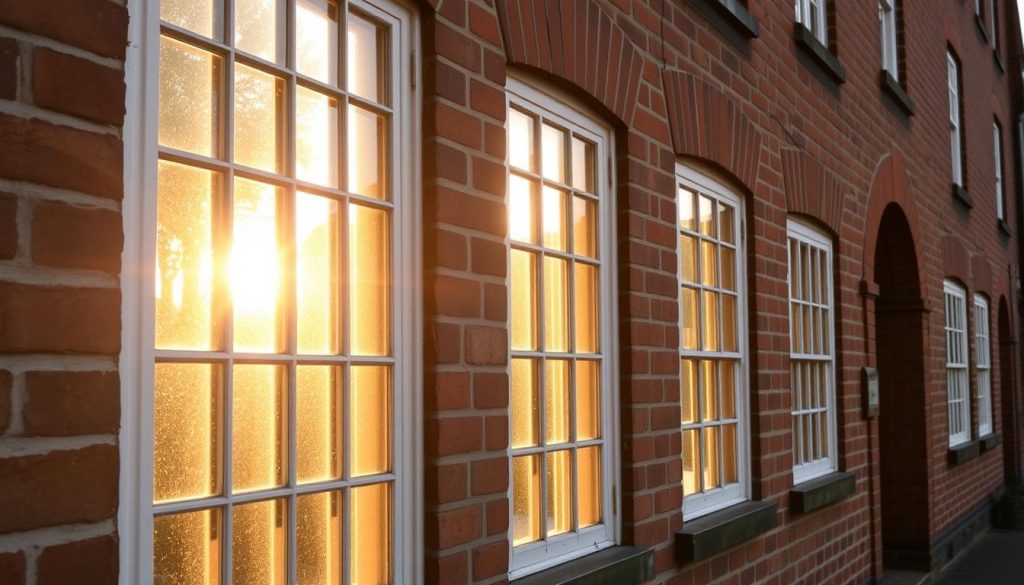
By following these rules, we can keep Chesterfield’s areas special. We can also meet today’s needs and rules.
Planning Permission for Window Replacements
When you think about changing windows in Chesterfield’s old areas, knowing about planning permission is key. These areas are protected to keep their look and history. So, changing windows must follow certain rules.
When Is Planning Permission Required?
You usually need planning permission for new windows in these areas. This is unless the new windows look exactly like the old ones. If you change the type or size of the windows, you’ll need permission.
What matters most is the design, materials, and how you install the windows. For example, swapping old sash windows for new ones that look the same might not need permission. But, it depends on the area’s rules.
Typical Regulations and Guidelines
The local planning office has rules for changing windows in old areas. These rules cover things like:
- The materials you can use (like wood or uPVC)
- The style of the windows (like sash or casement)
- The colour and finish of the windows
- How you install them and any extra features
Following these rules helps homeowners get their window changes approved. This way, they keep the area’s charm while making their homes better.
Types of Windows Permitted in Conservation Areas
Choosing the right windows is key in Chesterfield’s conservation areas. These areas keep the old look and feel of a place. Windows must fit with this goal.
There are many things to think about when picking windows. Style, material, and design are important. Traditional windows are often chosen, but modern ones that follow rules are also good.
Traditional Styles to Consider
Traditional windows are great for old buildings. They include:
- Sash windows, a classic look of many old buildings
- Timber windows, natural and can match the original
- Bespoke windows, made to look like the originals
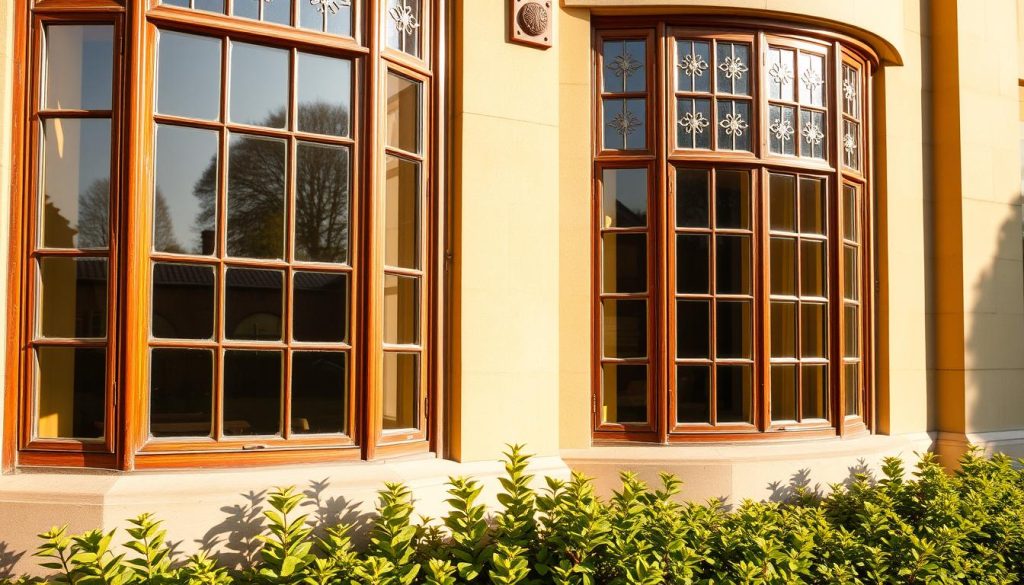
These styles meet conservation rules and keep the area looking good. Bespoke windows Chesterfield conservation experts can make windows just for your home.
Modern Alternatives that Comply with Regulations
Modern windows can also meet conservation rules. For example:
- uPVC windows that look like old ones but save energy
- Double-glazed windows that keep warm in and cold out
- Windows made to last but still look old
These modern options are practical for today’s needs. They let homeowners keep their property in line with the area.
Application Process for Planning Permission
Getting planning permission for window changes in Chesterfield’s old areas has many steps. It needs careful attention and knowing local rules well.
Step-by-Step Guide to Submitting Your Application
To do well in this process, follow our guide:
- Pre-application consultation: Talk to local planners about your plans and what they expect.
- Gather necessary documentation: You’ll need detailed drawings, photos, and a clear plan of your work.
- Submit your application: Make sure all forms are filled out right and all documents are attached.
- Wait for a decision: The planners will look at your application, which might take a few weeks.
By following these steps, you make sure your application is complete and follows local rules.
Common Mistakes to Avoid
When applying for planning permission, avoid common mistakes. These can slow down or stop your application. Some mistakes include:
- Incomplete or inaccurate forms: Make sure all info is right and full.
- Insufficient documentation: Give detailed drawings and photos to back your application.
- Failure to consult with neighbours: Talking to neighbours can solve problems before they start.
Knowing these common mistakes helps you avoid them. This makes your application process smoother.
Key Considerations for Homeowners
Homeowners in Chesterfield’s conservation areas must think carefully about window replacement. It’s not just about new windows. It’s about keeping your home’s character and the area’s charm.
Impact on Property Value
Replacing windows can change your property’s value. Choosing the right, historically fitting windows can make your home look better and increase its value. But, the wrong windows can make your home look worse and lower its value. Finding the right mix of new and old is key.
Think about these things when looking at how new windows will affect your home’s value:
- The style and material of the new windows
- How well the new windows match the home’s style
- The quality of the installation
| Factor | Considerations | Potential Impact |
|---|---|---|
| Window Style | Traditional vs. modern designs | Aesthetic appeal and historical accuracy |
| Material | Wood, uPVC, or aluminium | Durability, maintenance, and energy efficiency |
| Installation Quality | Professional installation vs. DIY | Performance, longevity, and warranty |
Neighbourhood Aesthetics and Community Input
The look of the neighbourhood is very important in conservation areas. The design and materials of new windows can greatly affect the street’s look. Homeowners should keep the area’s beauty in mind.
What neighbours and local groups think is also important. Talking to them can help make sure your plans fit with what everyone wants.
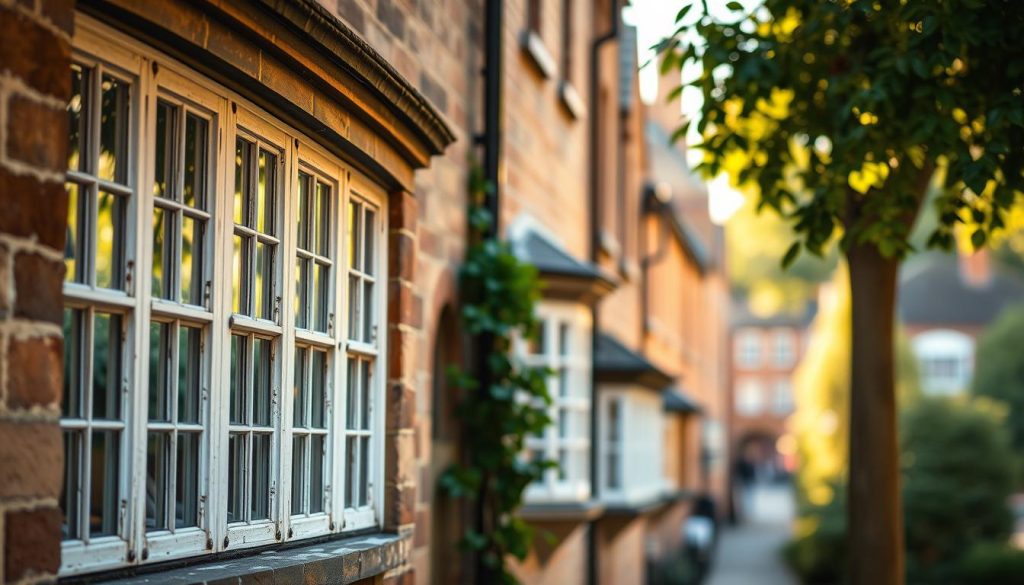
By thinking about these points, homeowners in Chesterfield’s conservation areas can make smart choices about windows. They can meet their needs while also helping to protect the area’s beauty.
Energy Efficiency in Conservation Areas
Keeping Chesterfield’s old areas green is a tricky task. We need to use new tech without harming the old look. It’s all about cutting down on carbon without losing the charm of these places.
Balancing Modern Needs with Heritage
It’s hard to mix new energy-saving ideas with keeping old buildings looking the same. We must find ways to add new windows that don’t change the building’s feel. This means:
- Checking how well old windows work and finding ways to make them better.
- Looking for new materials and designs that fit with the old look.
- Following the rules for these special areas.
With careful planning, we can meet today’s energy needs and keep the old look.
Available Solutions and Resources
There are many ways to make old areas energy-smart. Some options include:
- Double-glazing: This makes windows better at keeping heat in without changing how they look.
- Secondary glazing: It’s a way to make windows more efficient without taking out the old ones.
- Specialist window manufacturers: These companies make windows that fit with old buildings but are also energy-saving.
Homeowners can also talk to local experts and use resources from local groups. This helps make sure projects follow the rules.
With these options, we can make old areas energy-smart without losing their charm.
Dealing with Local Authorities
Getting planning permission for new windows in Chesterfield’s conservation areas is important. It can be hard to deal with local rules, but we can help. We’ll guide you through it to make it easier.
Who to Contact for Advice
Knowing who to talk to is the first step for new windows in conservation areas. Start with the Conservation Officer at your local council. They know the rules for your area and what you need for new windows.
Key Contacts:
- Conservation Officer: For advice on conservation area regulations and window replacement guidelines.
- Planning Department: For information on the planning permission process and application requirements.
Navigating the Approval Process
The approval process for new windows in conservation areas has several steps. We’ll show you what to do to get ready.
| Stage | Description | Key Documents Required |
|---|---|---|
| Pre-Application | Initial consultation with the Conservation Officer to discuss your plans. | Property plans, window designs, and photographs of existing windows. |
| Application Submission | Formal submission of your planning application. | Completed application form, supporting documents, and application fee. |
| Review and Approval | The local authority reviews your application and makes a decision. | Additional information or amendments as requested by the authority. |
Good communication with local authorities is key to a successful application. Be ready to share all about your window plans. Also, answer any questions quickly from the local authority.
By knowing who to talk to and how to go through the approval process, you can make sure your new windows follow local rules. This will also make Chesterfield’s conservation areas more beautiful.
The Role of Conservation Officers
Homeowners in Chesterfield’s conservation areas need to know about conservation officers. These officers make sure changes, like new windows, fit the area’s history. They check if new windows match the area’s look.
Responsibilities and Influence
Conservation officers do important jobs. They look at plans and make sure they follow the rules. They decide if new windows are okay.
Homeowners need to listen to what conservation officers say. They can help pick the right windows for the area. This makes sure the work fits with the area’s goals.
Impact on Window Replacement Projects
What conservation officers say can change a project a lot. Working with them helps homeowners understand what’s needed. This makes the project more likely to get approved.
| Aspect | Conservation Officer Input | Impact on Project |
|---|---|---|
| Design and Style | Guidance on appropriate historical styles | Ensures compliance with conservation area regulations |
| Materials | Advice on traditional materials vs. modern alternatives | Affects the aesthetic and historical authenticity of the property |
| Planning Permission | Assessment of application against conservation regulations | Determines whether the project can proceed as planned |
Working with conservation officers helps homeowners with window changes in Chesterfield’s areas. It makes the process easier.
Resources and Further Reading
Looking to learn more about replacing windows in Chesterfield’s conservation areas? We’ve got a list of useful resources and contacts for you. It’s important to understand the details of restoring windows in these areas for a successful project.
Useful Contacts and Websites
The Chesterfield Borough Council’s website is a great place to start. It has lots of info on conservation policies and guidelines. Also, the Historic England website has detailed guides on restoration, including window replacement in conservation areas.
Recommended Reading
For more on conservation policies, check out books from the Society for the Protection of Ancient Buildings and the National Trust. These books offer tips on restoration and conservation. They help make sure your window replacement project follows the rules and respects Chesterfield’s old buildings.