


We set out the decision in plain terms: what each frame material really costs now—and how that plays out over the life of your home.
Simple metrics, clear outcomes. Typical 2025 price bands show a clear split: upvc tends to sit at the lower end of the scale, while aluminium suits design-led projects with slimmer sightlines and greater rigidity.
We compare what matters: warmth, strength, security and maintenance. That means translating energy tech into human outcomes—fewer cold spots, calmer rooms and potential bill savings.
Lifespan and value matter too. Expect roughly 20–30 years from upvc and 30–40+ from aluminium, with well‑finished systems lasting longer. Both can meet British Standards and use multi‑point locks; aluminium’s stiffness gives a security edge.
We treat sustainability as part of specification: aluminium is highly recyclable and upvc recycling is improving. This guide helps you choose with strategy, not guesswork.
Key Takeaways
- Weigh short‑term savings against long‑term value when choosing frames.
- Performance covers warmth, strength, maintenance and aesthetics.
- Price bands in 2025: upvc generally cheaper; aluminium pricier but slimmer.
- Expect ~20–30 years for upvc and ~30–40+ years for aluminium systems.
- Security and British Standards are baseline requirements.
- Sustainability: aluminium’s circularity vs improving upvc recycling.
uPVC and aluminium at a glance: what each material brings to UK homes
Start with purpose: what each frame actually does for your living space. We break the essentials into clear, usable points so you can match form to function.
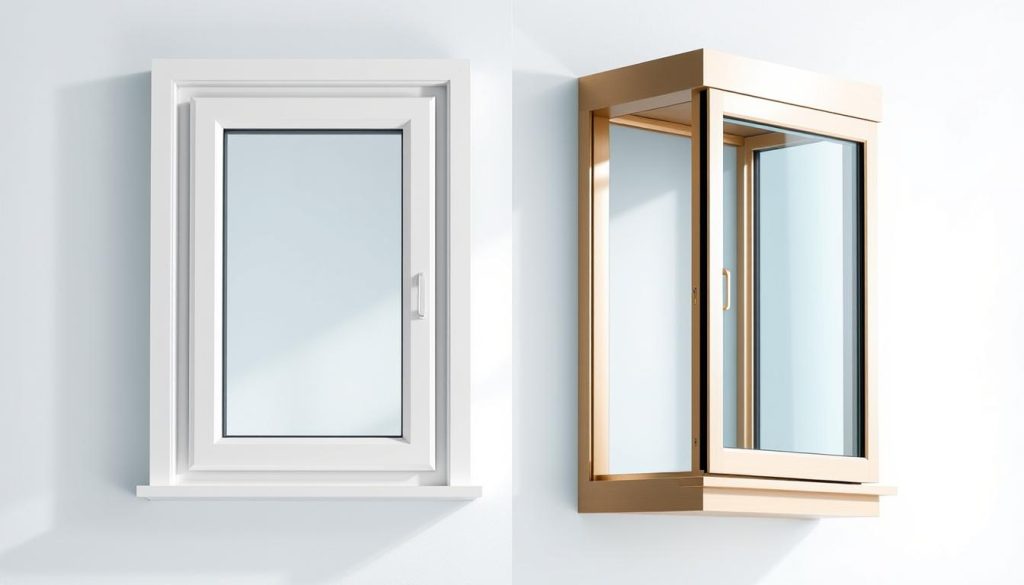
What are uPVC frames? Basics, benefits and common uses
upvc describes multi‑chambered plastic profiles that trap air for insulation. They offer reliable thermal performance, low upkeep and accessible pricing.
Typical use: semi‑detached and terraced houses, and period homes where wood‑grain foils supply a sympathetic style.
What are aluminium frames? Slim profiles and modern appeal
aluminium blends strength with slim sightlines. Thermal breaks and powder‑coat finishes let large panes perform well, even in exposed, coastal locations.
Where it excels: feature frames, sliders and contemporary schemes that demand large glass areas and crisp sightlines.
“Choose the platform that supports your design intent and long‑term performance goals.”
- Finishes: foils for upvc; powder‑coat for aluminium.
- Daily life: both clean with a wash; aluminium resists UV fade better.
- Whole‑window design matters: glazing, spacers and seals must match the frame.
| Feature | upvc | aluminium | Best use |
|---|---|---|---|
| Thermal performance | Multi‑chamber insulation | Thermal break + glazing | All homes needing warmth |
| Profile | Thicker sightlines | Slim sightlines | Traditional vs contemporary |
| Finishes | Wood‑grain foils, neutrals | Powder‑coat, marine options | Texture vs crisp colour range |
| Maintenance | Simple wash‑down | Wash‑down; high UV resistance | Low effort long term |
uPVC vs aluminium windows cost UK: real-world pricing and what drives it
A headline price is only the start — size, glazing and access write the full bill.
Typical 2025 guide prices help you plan: we see ranges of upvc £250–£900 per unit and aluminium £600–£1,200 supply‑and‑fit. These bands vary by size, style and specification.
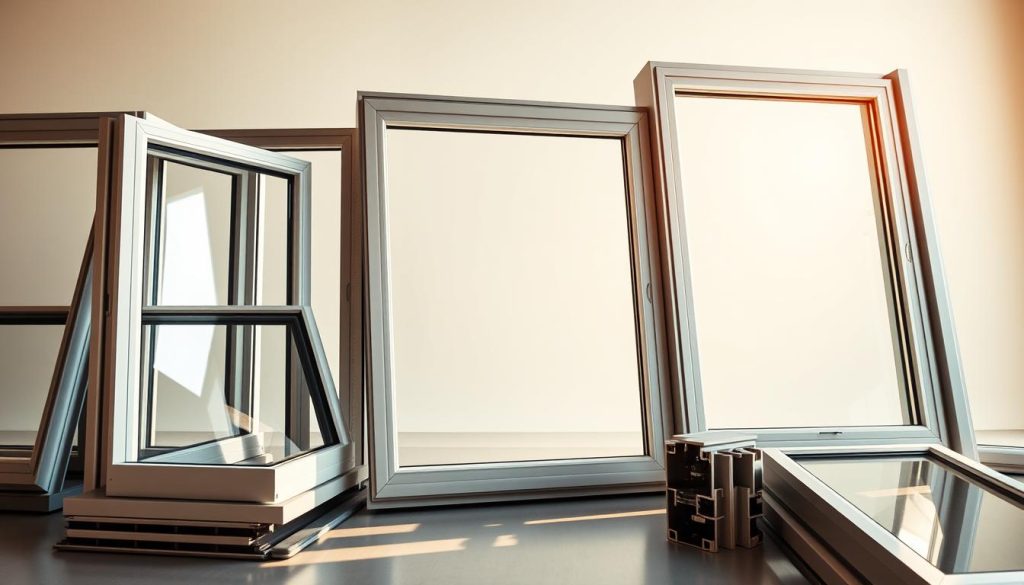
Typical 2025 price ranges per window
Entry models sit at the lower end. Large spans and bespoke shapes push the figure up. On like‑for‑like spans, upvc can halve the initial price compared with aluminium.
What pushes the final invoice
- Frame and span: bigger openings need stiffer sections and more fabrication.
- Glazing: double, triple or laminated glass raises price but improves comfort and security.
- Finishes: special foils or dual‑colour powder‑coats add premium fees.
- Installation: scaffolding, access and structural checks change labour time and making‑good costs.
Budgeting scenarios and sensible phasing
Whole‑home replacement with upvc controls spend and delivers quick comfort gains. Choose aluminium as a focal upgrade in reception rooms or extensions where sightlines matter.
We often recommend a blended approach: cost‑effective frames to the rear or upper floors, and feature aluminium units to the front. That way your money buys impact where it counts — and better seals and glazing can help cut winter bills.
Energy performance and bills: keeping heat in and saving money
Heat loss is the silent bill‑raiser in many homes — the right frame and glass slow it down.
Insulation tech explained: multi‑chamber upvc profiles trap pockets of air like tiny thermos flasks. Modern aluminium systems use thermal breaks to interrupt conductive heat paths. Both approaches can reach similar U‑values when matched with good glazing.
U‑values and glazing choices
Lower U‑values mean less heat escaping and a warmer room at the same thermostat setting.
- Double to triple glazing: adds insulation and reduces surface cold.
- Low‑E coatings + argon fill: improve performance without thickening the frame.
- Warm‑edge spacers: cut edge chill and condensation risk.
Cold spots, condensation and weather sealing
Cold patches usually come from gaps and poor seals, not just old glass. Quality compression gaskets and correct installation close those gaps.
Condensation drops when the inner pane stays warmer and ventilation is balanced. That reduces mould risk and improves comfort.
| Action | Effect on heat loss | Impact on energy bills |
|---|---|---|
| Upgrade glazing | Lower U‑value | Moderate savings |
| High‑spec thermal break | Close to plastic performance | Targeted savings on large panes |
| Professional installation | Eliminates draughts | Immediate comfort, long‑term savings |
Practical rule: match material and glass to the room. Use high‑spec thermal breaks for big spans and choose multi‑chamber profiles for standard openings. And remember: insulation, loft draught‑proofing and seals work together — don’t overspend on glass if the rest of the envelope is weak.
Durability, maintenance and lifespan: value over the years
A frame’s true return shows up after a decade of weather and use. We look beyond sticker price to lifespan and ongoing upkeep. That tells you what your house will ask for in years ahead — and what buyers will notice at resale.
Expected lifespans and real value
Typical lifespans: plastic profiles commonly serve 20–30 years with routine care. Premium metal systems generally reach 30–40+ years, with some installers citing nearer 50 years for high‑grade finishes.
Day‑to‑day upkeep and avoiding issues
Maintenance is straightforward: a gentle wash with soapy water keeps seals, hardware and finishes healthy. Avoid abrasive cleaners on foils and check handles and locks annually.
- Value over time: fewer replacements and stable finishes reduce lifetime expense.
- Hidden costs: failed seals, worn hinges or glazing replacement chip away at initial savings.
- Coastal advice: choose marine‑grade coatings by the sea to limit corrosion.
- Warranties: aim for substantial guarantees and reputable installers.
| Aspect | Plastic profiles | Metal systems |
|---|---|---|
| Typical lifespan (years) | 20–30 | 30–40+ (up to ~50) |
| Maintenance | Simple wash; avoid abrasives | Wash; powder‑coat resists UV |
| Best value | Cost control short‑term | Long‑term durability, resale appeal |
Style, light and kerb appeal: frames, colours and finishes
Style can change a room the moment light meets glass. Slim frames let larger panes bring more daylight and a clean, modern look. That extra light alters how rooms feel and how you use them.
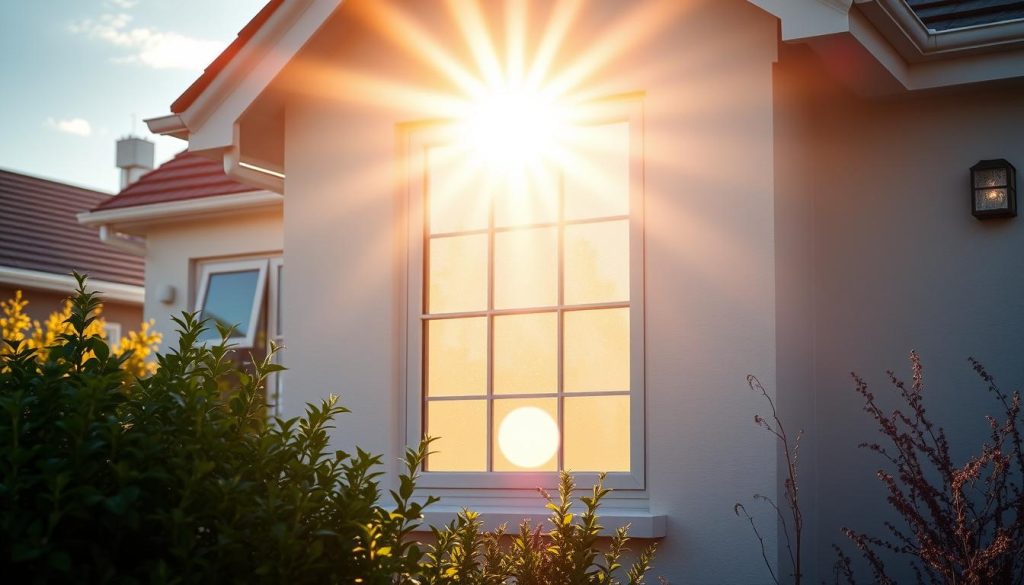
Design choices start at the frame edge. Aluminium windows offer razor‑thin sightlines and a minimalist aesthetic. By contrast, upvc aluminium windows with wood‑grain foils suit period façades and warm interiors.
- More glass, more light: slimmer sections increase visible glass and flood rooms.
- Colour and finishes: powder‑coat paints give durable matt or gloss tones; foils hide scuffs and mimic timber.
- Dual‑colour options: match an external planning palette while keeping the interior scheme cohesive.
- Detail matters: glazing bars add character but break views—use them with intent.
Keep proportions true to the house. On contemporary builds, slim mullions enhance geometry. For period replacements, respect original rhythms and select heritage finishes that read as authentic.
“First impressions are physical — your frame and finish do the talking at the kerb.”
| Feature | Modern look | Period sensitivity |
|---|---|---|
| Sightlines | Slender, minimalist | Proportioned, slightly deeper |
| Finishes | Powder‑coat, dual colours | Wood‑grain foils, muted tones |
| Maintenance | Dust shows on dark shades | Textured foils hide small marks |
Security features and hardware options
Security starts where material meets detail: a stiff frame and the right locks make forced entry far harder. We focus on layered protection — frame strength, glazing and certified hardware — because prevention is simpler than repair.
Frame strength, multi‑point locks and laminated glass
Aluminium’s rigidity gives a real security advantage: less flex, fewer leverage points and greater resistance to prying.
Both systems commonly use multi‑point locking for even force distribution. We recommend laminated glass at ground level and other vulnerable spots: it holds together on impact and delays entry.
Internal beading, hinge protection and compliance with British Standards
Internal beading prevents glazing being popped out from the outside — a simple, essential barrier.
Check hinge and handle grades: good hardware resists levering and corrosion. Ask installers for documented compliance with British Standards rather than vague “tested” claims.
- Prioritise rigid frames, quality keeps and multi‑point locks to deter opportunists.
- Use laminated glass in exposed locations for extra delay under attack.
- Ensure steel reinforcement and secure fixings where plastic profiles are used.
- Fit child restrictors and key‑locking handles where safety demands them.
- Service locks and hinges annually to keep mechanisms working and secure.
| Feature | Benefit | Practical note |
|---|---|---|
| Rigid frame | Reduces pry points | Aluminium excels; reinforce plastic profiles with steel |
| Multi‑point lock | Even force distribution | Look for accredited multipoint systems and certified installation |
| Laminated glass | Resists break‑in attempts | Specify at ground floor and doors; meets safety regs |
| Internal beading & hinge protection | Stops external glazing removal | Essential on accessible elevations |
“Security is a system, not a single part — the chain is only as strong as its weakest link.”
Installation and project planning in the UK
A well‑run replacement project feels like choreography: measured steps, tidy finishes. We map the journey so you know what to expect and how long each act takes.
What to expect on site: timeframes, disruption and making good
Typical installs take one to three days for a standard home. Larger spans or awkward access add time.
We follow a four‑stage process: survey, fabrication, installation and snagging. Each stage documents requirements and key factors that affect windows cost and delivery.
- On‑site rhythm: trims off, prepare reveals, set and square frames, seal, glaze and finish.
- Disruption: dust sheets, room sequencing and daily tidy‑downs limit inconvenience.
- Handling: upvc units are lighter to move; aluminium demands precise alignment for clean sightlines.
- Options: cill replacements or trim upgrades are small works with big visual impact.
| Aspect | Typical time | Practical note |
|---|---|---|
| Single window | 1 day | Minimal making good |
| Multiple units | 1–3 days | Phase by floor to live in the home |
| Complex access | Extra days | Budget contingency to cover surprises |
Plan around dry weather for sealant curing. If windows cost is a concern, phase works to keep your home functional. For peace of mind, choose installers who record requirements, communicate clearly and stand behind their work — that is the simple, smart choice.
Local weather and sustainability: performance, recycling and footprint
Local climate shapes performance more than product labels ever will. We match specification to place so your frames survive weather and deliver long-term value.
Coastal, wet and windy conditions
Coastal spray and driving rain favour marine‑grade finishes. Proper powder‑coats and rigid sections resist corrosion and flex under wind loads. That makes them a sensible pick for exposed facades.
Seals and drainage paths matter as much as material. Robust gaskets, sloped sills and clear weep channels stop water ingress. Specification beats slogans every time.
Milder regions and thermal movement
In gentler climates, plastic profiles remain an economical, high‑performing choice for most homes. They handle everyday weather well and usually deliver excellent energy performance when paired with good glazing.
Allow for expansion and contraction: competent installers plan movement gaps and fixings. That simple step reduces squeaks, draughts and premature wear.
Recycling, embodied energy and long‑term value
Aluminium is 100% and infinitely recyclable — re‑melting uses only a fraction of the energy of primary production. That lowers embodied energy and boosts circularity.
Progress in plastic recycling is closing the loop too. Collection schemes and tighter manufacturing controls are improving the material’s footprint.
“Better insulation cuts operational energy — and durable frames protect that saving for decades.”
- Choose marine‑grade finishes by the coast; standard coatings suit inland homes.
- Focus on seals, drainage and installer detail in wet, windy areas.
- Ask installers about recycling routes for removed frames and glass.
| Environment | Practical tip | Value |
|---|---|---|
| Coastal | Marine‑grade coatings; stronger sections | Longevity, lower maintenance |
| Inland, mild | Standard finishes; high‑spec glazing | Cost‑effective energy savings |
| All regions | Responsible disposal and recycling partnerships | Reduced embodied impact |
Conclusion
Decide where you want to save money now and where to invest for lasting value. Choose upvc to save money upfront and lift comfort fast; choose aluminium for long‑term value, strength and slim sightlines. Both deliver security and weather‑tight performance when specified correctly.
Practical plan: use cheaper frames for secondary rooms and put feature aluminium units where light and lines matter. Budget using the current windows cost bands — they give you a clear starting point for phasing work.
We aim for one outcome: a home that feels right and holds value. Match benefits to goals — warmth and quiet for family rooms; daylight and drama for reception spaces — and the right choice becomes obvious.
Final note: define priorities, set a phased plan and specify to your environment. The best window is the one that aligns cost, performance and feeling — every day, for years.