


Have you seen your windows fog up, despite trying to stop it? It’s a common issue in the UK’s uneven weather. Foggy windows can block your beautiful views and make your home less comfy. This guide gives you expert tips and simple solutions. We want your views to stay clear and your rooms dry.
Key Takeaways
- Understand what causes window condensation and how to identify it.
- Learn effective ventilation techniques to manage indoor humidity levels.
- Discover the benefits of proper insulation and sealing for your windows.
- Explore natural solutions and DIY remedies that work.
- Know when to seek professional help for persistent condensation issues.
Come with us to find out how to stop condensation on windows. We’ll show you how to prevent window condensation. And how to keep your home cosy and clear.
Understanding Window Condensation and Its Causes
Window condensation isn’t just annoying. It can also show bigger problems in your home. If you’re searching for ways to fix indoor window condensation, it’s key to know why it happens and what makes it worse.
What is Window Condensation?
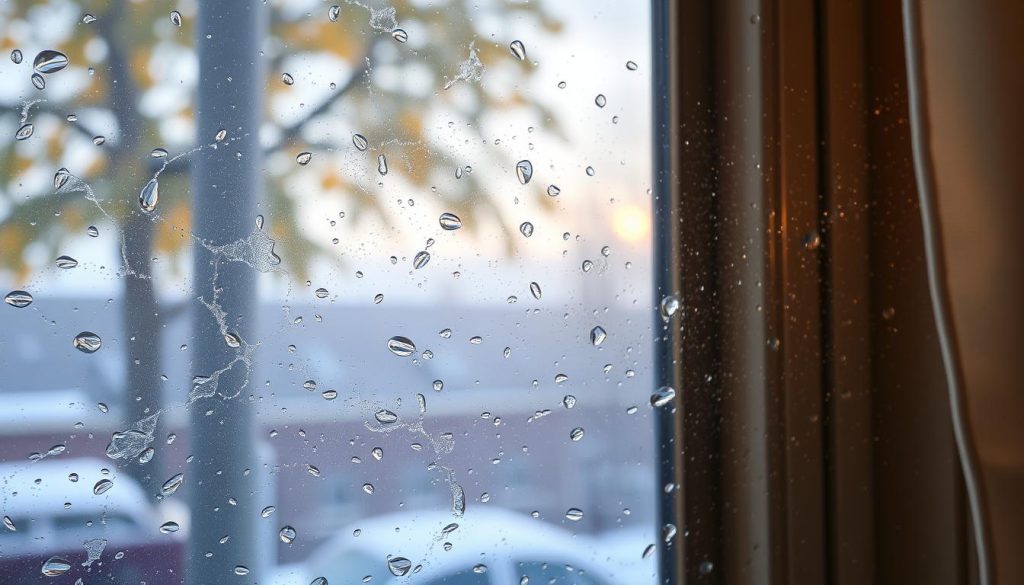
Window condensation is wetness on your window’s inside surface. It forms when warm, moist air inside meets the cold glass. This makes the air lose its moisture as it cools, leading to condensation. Knowing this process helps in finding the right condensation on windows solutions.
Common Causes of Condensation
Many daily activities can make your home more humid and cause window condensation:
- Cooking: Steam from boiling and steaming adds to your indoor air’s moisture.
- Showering: Hot showers produce steam, spreading moisture around your home.
- Breathing: Simply breathing can up the humidity, especially in tight spaces with bad air flow.
Understanding these causes can help you find the best indoor window condensation remedies for your home.
The Impact of Humidity Levels
It’s important to manage your home’s humidity. The right humidity level cuts down on condensation. It also makes for a healthier place to live. Too much humidity causes too much moisture, adding to window condensation. By controlling humidity, you can find lasting condensation on windows solutions.
Importance of Controlling Humidity in Your Home
It’s vital to control your home’s humidity for a comfy and healthy space. Keeping moisture off your windows and using smart ways to fight condensation helps a lot. It makes the air better and keeps your windows and walls in good shape for longer.
Ideal Humidity Levels for Comfort
The best humidity level for your home is between 40-60%. This range stops your skin from drying out and helps you breathe easier. It also keeps your wooden stuff from getting damaged.
Health Risks Associated with High Humidity
High humidity can lead to health problems because of mould and dust mites. These can make asthma and other breathing issues worse. It’s important to keep the humidity low to stay healthy.
Benefits of Maintaining Optimal Indoor Humidity
Keeping the right humidity level has many perks for you and your house. It improves the air in your home, making it less likely for allergens to bug you. It also stops moisture on your windows. This protects your house and cuts down on repairs. Using good ways to control condensation keeps your home comfy and healthy.
Effective Ventilation Solutions
Ventilation is vital for keeping your home dry. It stops window condensation and makes living more comfortable.
Simple Ventilation Techniques
Opening your windows often is an easy fix for moisture. Fresh air helps reduce condensation. Trickle vents are also good. They let air flow without opening windows fully.
Installing Exhaust Fans
Exhaust fans work well in damp places like kitchens and bathrooms. They pull out wet air, reducing condensation. Having one in these rooms helps keep your home drier.
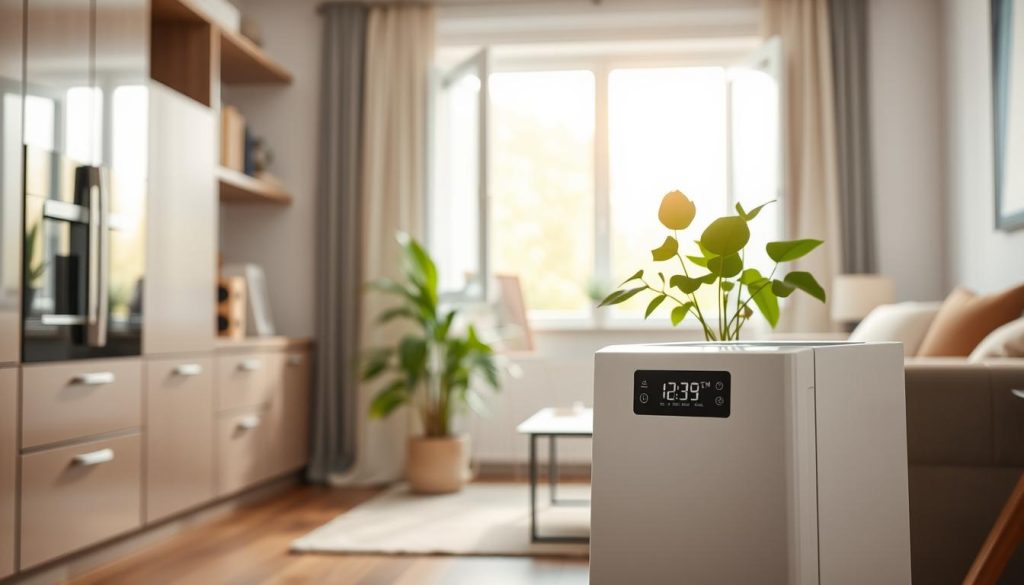
Utilising Dehumidifiers
Dehumidifiers draw moisture from the air. They keep the indoor air at the best humidity. You can choose from different sizes for your space.
These tips offer effective ways to fight moisture and window condensation. They improve your home’s comfort and health.
Proper Insulation and Window Sealing
Keeping your home cosy is very important. Proper insulation and window sealing stop window condensation. They keep your home warm and cosy. This way, your home stays at one warm temperature. It stops moisture from building up.
The Role of Insulation in Reducing Condensation
Insulation is very important for less window condensation. It acts like a barrier against cold air outside. This keeps your home’s temperature stable. Stable temperatures mean no condensation on windows. Good insulation stops the warm air from meeting cold window glass. So, your home stays warm inside, stopping condensation.
Tips for Sealing Windows Properly
Sealing your windows right is key to handling condensation. Make sure there are no gaps around your windows. These gaps let cold air in. Use weather stripping or caulking to seal them. This keeps cold air out and warm air in. It also stops window condensation.
Choosing Energy-Efficient Windows
Choosing energy-efficient windows helps a lot. Windows with double or triple glazing insulate better. This keeps the inside glass warmer. It stops condensation by keeping the temperature even. These windows also have special coatings. These coatings help keep your home dry. So, choosing these windows can really help.
Utilizing Anti-Condensation Products
Anti-condensation treatments are great for double pane windows. They stop moisture from gathering on the windows. This makes sure your view is clear and the window stays dry.
Overview of Anti-Condensation Treatments
These treatments include window films and special paints. They add an insulating layer that cuts down on moisture. This keeps windows clear and helps them last longer.
Pros and Cons of Window Films
Window films are a favourite for fighting window condensation. They’re easy to use and work well. But they might make the glass less clear and change how your windows look.
| Pros | Cons |
|---|---|
| Easy to apply | May reduce visibility |
| Effective moisture control | Potential aesthetic impact |
| Cost-effective |
How to Apply Anti-Condensation Products
Before applying these products, clean your window well. This helps the product stick. Always follow what the product maker says for the best result. Use films or paints evenly to lower condensation.
Natural Solutions and DIY Remedies
Looking for easy and smart ways to stop window sweating is important for a cozy home. Going green not only helps the planet but also adds a simple fix to this issue.
Opening Windows and Circulating Air
One easy trick is to open windows often to let air move freely. This brings in fresh air, balances wetness, and cuts down on damp glass.
Using Indoor Plants to Absorb Moisture
Plants like peace lilies and Boston ferns soak up lots of air moisture. They make your space pretty and help with condensation on windows solutions.
Harnessing Salt to Absorb Humidity
Using salt as a natural dry-out tool is a smart yet often missed trick. Small salt pots around your place can soak up extra wet air. This helps keep windows clear and is easy on the pocket.
Addressing Temperature Discrepancies
It’s vital to keep your home warm to stop window condensation. By using heat smartly, you can fight off condensation. This helps with temperature differences that cause it.
Keeping Your Home Warm During Winter
Winter’s cold could lower indoor warmth, leading to more condensation. Make sure your home stays insulated and warm. Keeping a regular heating schedule when it’s cold outside helps. A cosy indoor space is good against condensation on windows.
How to Use Heat Sources Wisely
Turning up heat smartly helps prevent window condensation. Choose a low, steady heat over blasting it suddenly. Keeping your home’s temperature steady is important. Use portable heaters carefully and keep them away from windows.
Tips for Managing Cold Drafts
Drafts can make your windows colder and cause more condensation. Think about weather stripping or draft excluders for doors and windows. This stops cold air from getting in and keeps warm air inside. Controlling temperatures well plays a big part in fixing condensation on windows.
Window Styles and Their Impact on Condensation
Picking the right window type really helps stop prevent window condensation. It also keeps your home comfy. There are many windows like single and double glazed ones. And they are made from different things like uPVC and aluminium. Each kind has its good points.

Comparing Single vs. Double Glazed Windows
Double glazed windows are better at keeping warmth in. This means they get less foggy. They have two layers of glass. This stops heat from getting out. So, your house stays warm.
Best Window Styles for Humidity Management
Some windows are really good at handling moisture. For instance, casement windows let more air in. This makes it easy to keep the moisture at a good level. Sliding windows are easy to clean and look after. They too help stop prevent window condensation.
Pros and Cons of Different Materials
The stuff windows are made of affects how well they keep in heat. Here’s what you need to know:
| Material | Pros | Cons |
|---|---|---|
| uPVC | Cost-effective, excellent insulation, low maintenance | Can discolour over time |
| Wood | Highly aesthetic, good insulation | Needs lots of care, can rot |
| Aluminium | Durable, low maintenance | Not great at keeping heat without special help, costs more |
When to Seek Professional Help
Sometimes, our efforts to stop window condensation fail. If you’ve tried everything but still have issues, it’s time for professional help. Issues like mould and water damage mean you need an expert.
Signs You Need Professional Window Solutions
Knowing when to get professional help is important. Signs include constant mould, water damage, and ineffective old windows. These issues can worsen fast. It’s better to fix them early.
How to Choose a Qualified Contractor
Choosing the right contractor is essential. First, check their skills and previous work. Reading reviews helps to see if they are reliable. Getting several quotes is wise, but the cheapest may not be the best.
Cost Considerations for Professional Services
Professional services might seem expensive at first. Yet, they provide long-term benefits. Good work can stop window condensation and avoid future costs. Think about both immediate and long-term costs when choosing help.